

Date: 01.07.2026
Introduction
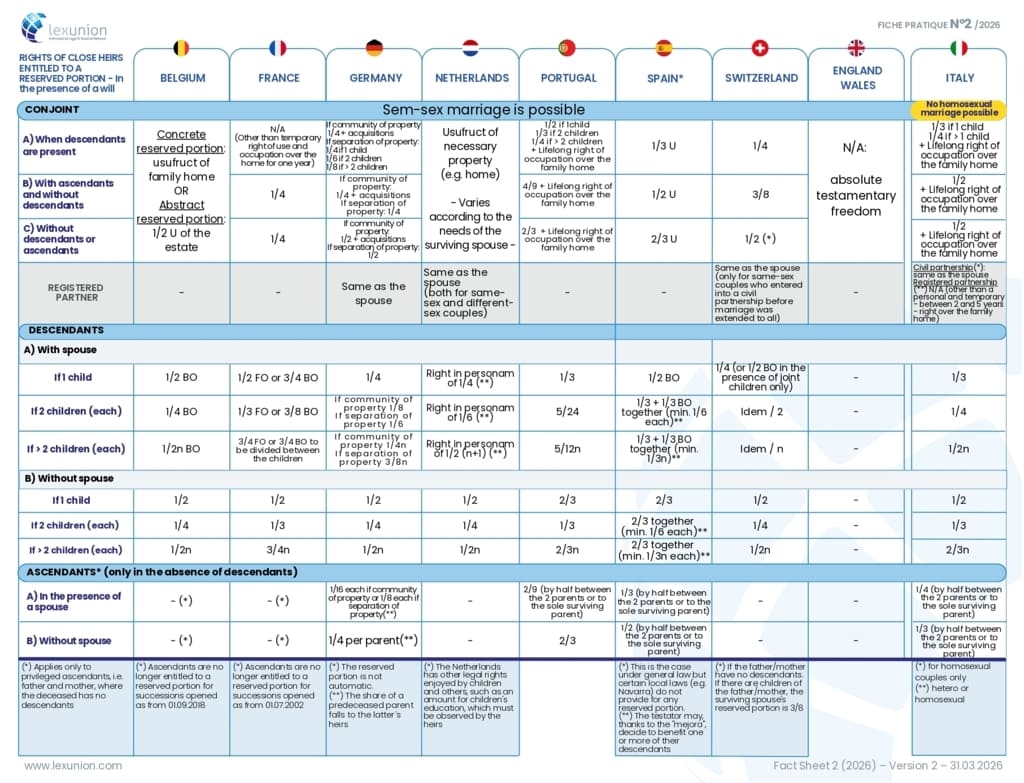
The following comparative tables concern member countries of the LEXUNION network. The first table shows the rights to a reserved portion, in other words the minimum share that the deceased cannot – in principle
take away from some of his or her relatives, such as the surviving spouse or partner, as well as direct-line heirs, namely descendants and ascendants, even if the deceased leaves testamentary dispositions. The second table shows the portion of the estate which the deceased may dispose of freely.
Aim of this Fact Sheet
Whereas Fact Sheet No. 1 (2026) showed the rights of heirs in the absence of testamentary dispositions, this one aims to show, across all member countries of the Lexunion network, both the margin for manoeuvre that a person intending to make testamentary dispositions has and the restrictions that apply (specifically reserved portions).
By reference to these two Fact Sheets, you will be able to:
- Make a comparative analysis of the portions of an estate that are prescribed by law as well as the scope for testamentary freedom,
- Analyse whether it is expedient to make a will according to the country of residence,
- Analyse whether it is expedient, in an international context, to make a choice of law (professio juris) as offered by Regulation (EU) No 650/2012 on successions.
Please consult the professionals in the LEXUNION network who will look at your particular situation and advise you on the issues concerned and opportunities available
